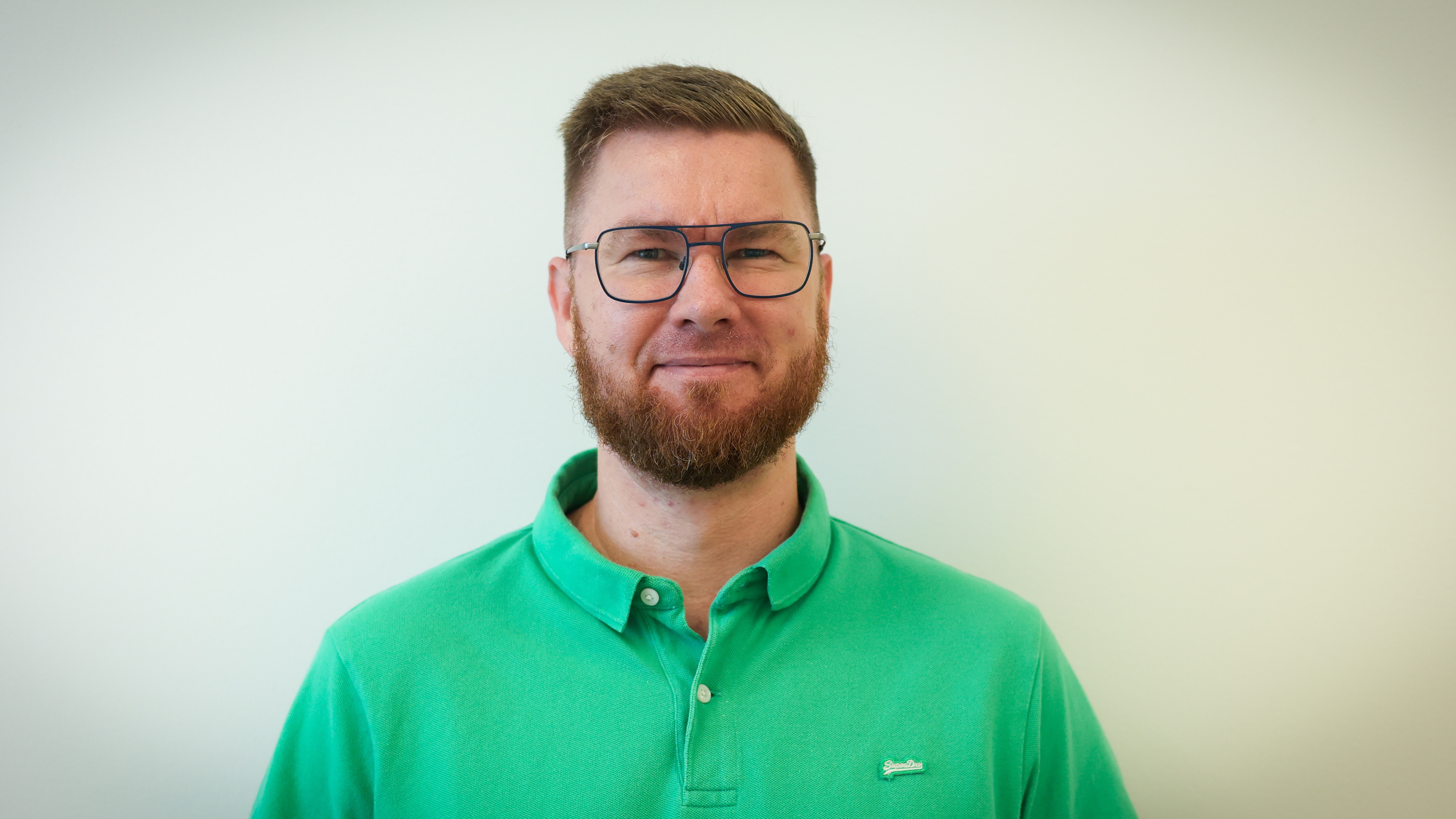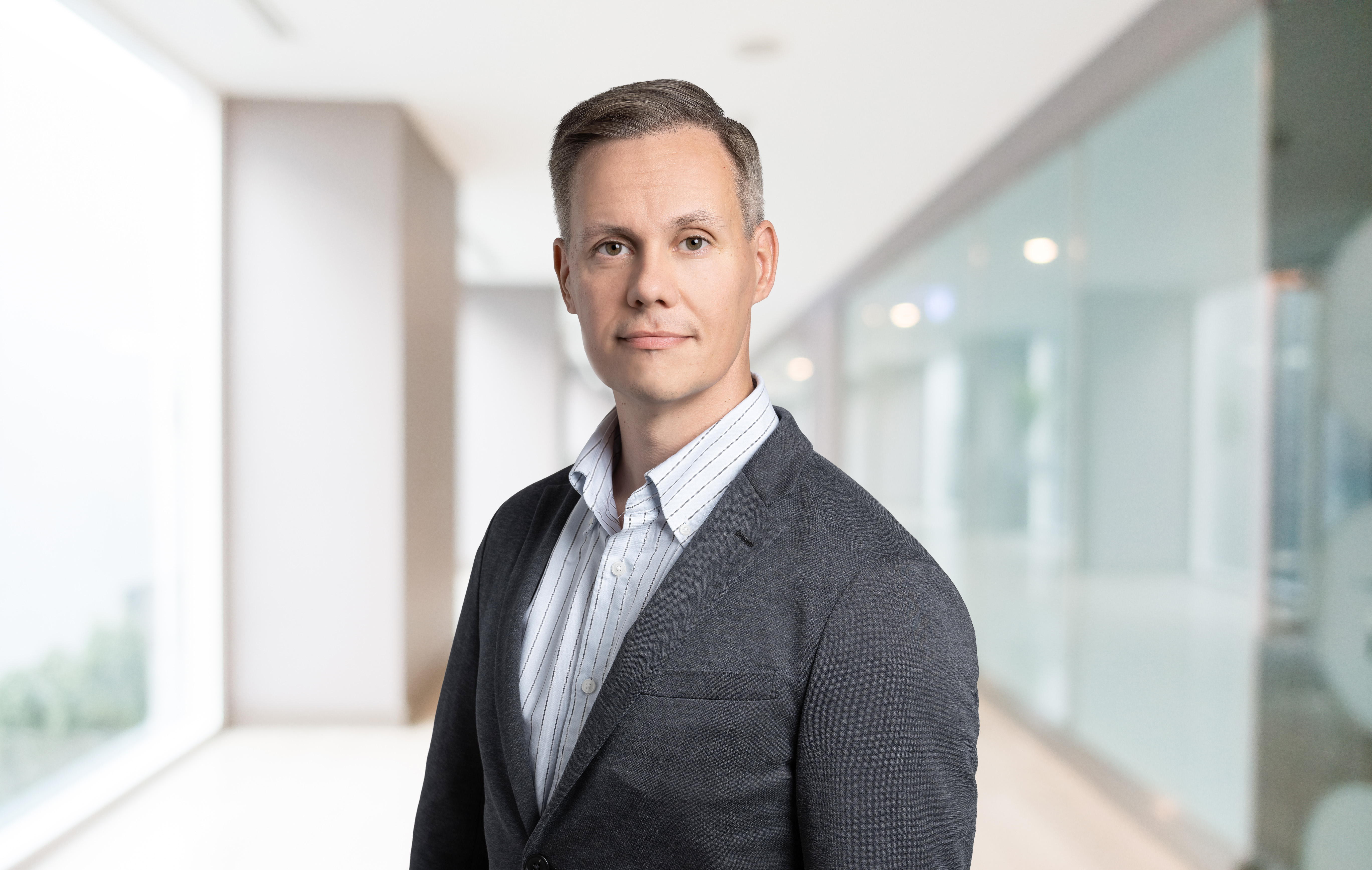
The turn of the year is often a natural moment to look ahead. In software development, however, it does not necessarily mean a complete change of direction, but rather continuous adaptation: learned lessons are taken further, working structures are strengthened, and new technological possibilities are explored. Through an interview, Profium’s CEO Perttu Heinonen opens the topic more deeply and explains what preparing for future changes means for the company.
What qualities will make a technology team successful in the future?
Perttu Heinonen places, above all, the ability to comprehend, not just to execute, at the core of a successful technology team: “One of the most important things in technology teams is a deep understanding of the problem and really good communication toward users. Ultimately, the qualities that distinguish a good team from a weaker one are quite non-technical.”
In the near future, this will be emphasized even more, as tools are developing rapidly and becoming increasingly accessible. The true competitive advantage comes from how well a team can understand how a solution supports the customer’s operations in the long term: “The teams that have been able to do things quickly have done so in very close cooperation with the customer and have constantly sought to understand what is really important, often even better than the customer themselves can initially define the problem.”
Will broad-based expertise or deep specialization be needed in the future?
According to Heinonen, the answer is not either–or. Future technology teams will need many types of expertise and, above all, the ability to combine them: “A team needs people who can broadly coordinate and understand different customers, cultures, and technical environments. However, if you want to stand out from the crowd, the expertise has to go very deep.”
Broad-based expertise helps in understanding overall systems and working at customer interfaces, but deep expertise differentiates good solutions from excellent ones. Heinonen emphasizes that artificial intelligence does not eliminate this need: “AI tools quickly provide a baseline, but that final step forward always requires a deep expert who knows their field so well that they can stretch it just one centimeter further.”
What are the most critical technical skills in the coming years?
Among technical skills in technology teams, understanding artificial intelligence and automation will inevitably take center stage.
“There is no way we can overlook competence in AI tools. We must understand what they can do, what they cannot do, and in which environments they can be used,” Perttu Heinonen says.
In Profium’s operating environment, this means much more than utilizing ready-made cloud services.
“We need to be able to manage components from the user interface all the way down to the hardware level—from databases to processors and network traffic—often in very exceptional and safety-critical environments,” Heinonen explains.
How will artificial intelligence and automation change employees’ roles?
The development of AI significantly increases productivity in many companies, but according to Heinonen it does not remove employee responsibility: “When things speed up tenfold or a hundredfold, someone still has to make sure that audit trails and approvals are in order. Problems in these areas cannot be the fault of an AI agent. Someone has always had to design and approve them.”
Perttu Heinonen estimates that the focus of work will increasingly shift toward planning, evaluation, and decision-making. Technical expertise will be more strongly combined with architectural and business-oriented thinking.
How important will soft skills be?
Even as automation increases, the importance of communication does not disappear. Teams may become smaller due to AI assistants, but collaboration will intensify. According to Heinonen, a surprisingly large part of IT work is communication between the customer or the team, not producing lines of code.
“A small, competent, and well-communicating team often achieves more than a large team, even if the latter has efficient processes,” Heinonen states.
How is Profium preparing for future changes?
Profium develops its expertise by combining a strong culture with technological renewal. Shared rituals, employee autonomy, and trust create a foundation on which new things are built.
“Things are not constantly dictated from the top down; instead, employees themselves participate in thinking about what should be used and how. That creates a natural sense of enthusiasm,” Perttu Heinonen explains.
In recruitment, the focus is on potential, as Profium seeks many different kinds of experts. According to Heinonen, the most important factors are the mathematical and logical thinking underlying expertise, as well as an engineer-like desire to explore.
“Many believe that the development of AI will remove the need for junior software developers, but I completely disagree with the idea that juniors would be in a weaker position. AI tools offer mentoring and learning in a way that has never existed before,” Heinonen states.
Looking toward 2026
At Profium, the past year has been one of building: many new employees, a new brand, and new websites. Heinonen feels that the next year will be a time of growth: “We are heading into 2026 with a strong growth target. We are ready to take the next growth leap and bring better versions of products to the market at an even faster pace.”
As 2026 approaches, technological tools are developing rapidly, automation is increasing, and teams are shrinking. One thing, however, remains unchanged: success requires the ability to grasp overall systems, collaborate seamlessly, and combine deep expertise with practical execution. Profium is preparing for the future by developing its capabilities through the combination of broad-based understanding and deep specialization, while increasingly integrating AI tools into everyday work. Heinonen also considers it important to strengthen a team culture in which employees have a genuine opportunity to influence the direction of their work.