In the late 1990s, few companies had yet stopped to consider how content could be found correctly online.
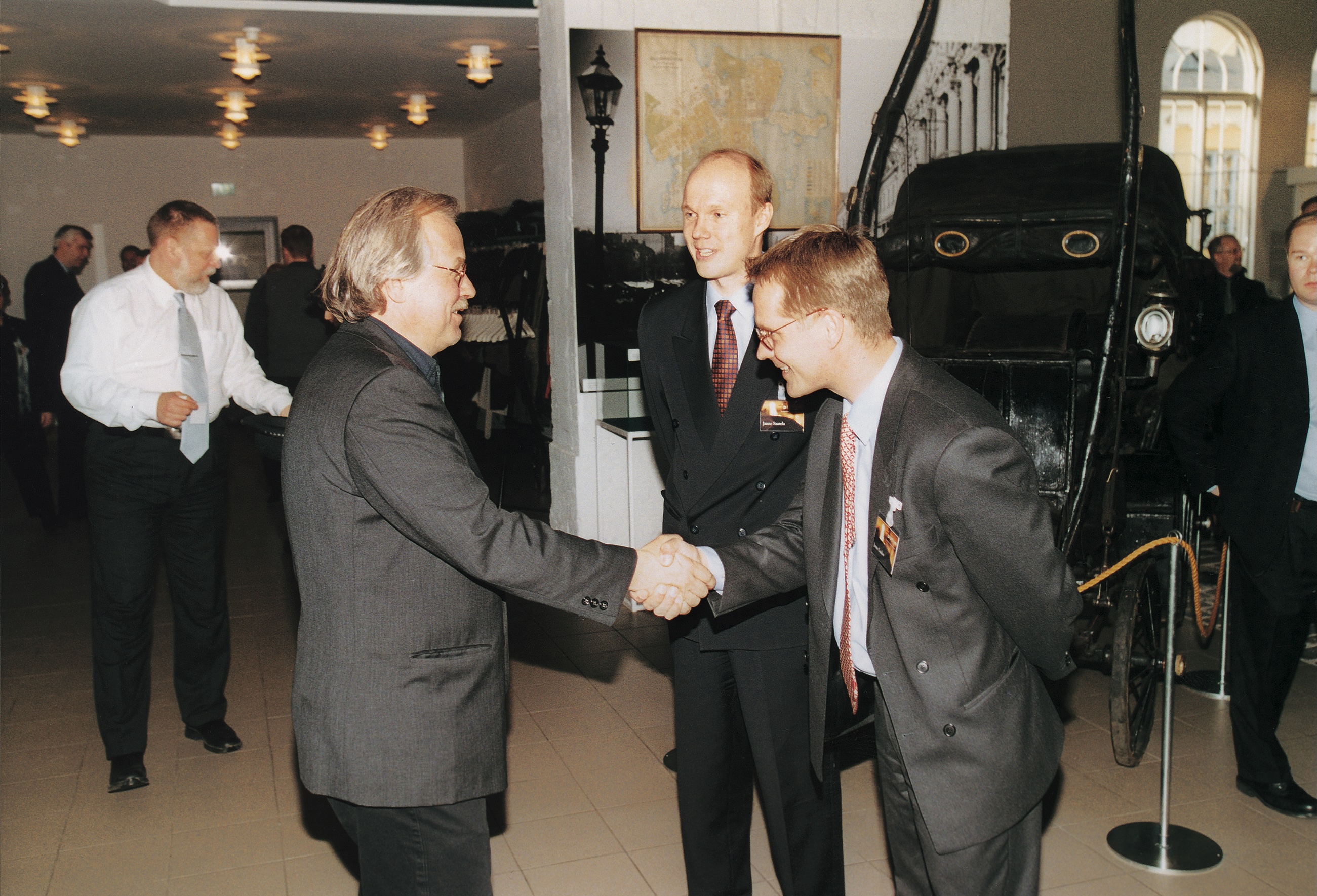
In the mid-1990s, Janne Saarela was working at CERN in a team doing fundamental research on the Semantic Web. Saarela went on to continue his doctoral research at the W3C in Sophia Antipolis, France. Janne Laakso was working at CERN at the same time, and the first spark of a business idea came from Saarela's drive to build and Laakso's drive to sell.
After returning to Finland, Janne Saarela worked as a researcher at Helsinki University of Technology, today's Aalto University, taking part in a joint project between Nokia Research Center and the Aamulehti Group that explored the added value the web could bring to media. Sharing an office in Otaniemi with Eero Tuomisto, then editor-in-chief of Kauppalehti Online, an idea took shape: what if real-time stock market data were brought straight onto the web?
Routing content to the right place at the right time was a problem few people were thinking about at the time. It was precisely due to this need that Profium was founded in 1996, as one of the first companies of its kind in Finland.
The first experiment was bringing real-time trading data from the Helsinki Stock Exchange online, at a time when Nokia was growing at a fast pace. The idea evolved into an online investor game in which students first tested investment strategies with simulated capital. Users of Kauppalehti's online service were soon able to try the same thing. Real-time market data proved to be a major draw for Kauppalehti's online service from the very beginning. Profium's work originally centred on helping the Aamulehti Group and Kauppalehti in particular.
One of the biggest moments of those early days was hiring Profium's first employee. It was concrete proof that a research idea was growing into a lasting, functioning company. Since then, the journey has included many people whose contributions have moved Profium forward step by step.
From service to product
One of Profium's turning points came in 1999. The four-shareholder company made a deliberate choice: instead of selling its experts' billable hours the way the consultancies of the day did, it wanted to solve global problems with products that scale better than human effort.
Janne Laakso joined Profium as a co-founder in the summer of 1999. At the same time, a business plan was written for investors. Alma Media came in as lead investor in spring 2000 and later sold its holding to PCA. Since 2012, Profium has been privately owned by its management and board.
The company's direction was bold technologically. Rather than managing metadata with separate industry-specific solutions, Profium decided to build on open Semantic Web technology, drawing directly on Saarela's doctoral research.
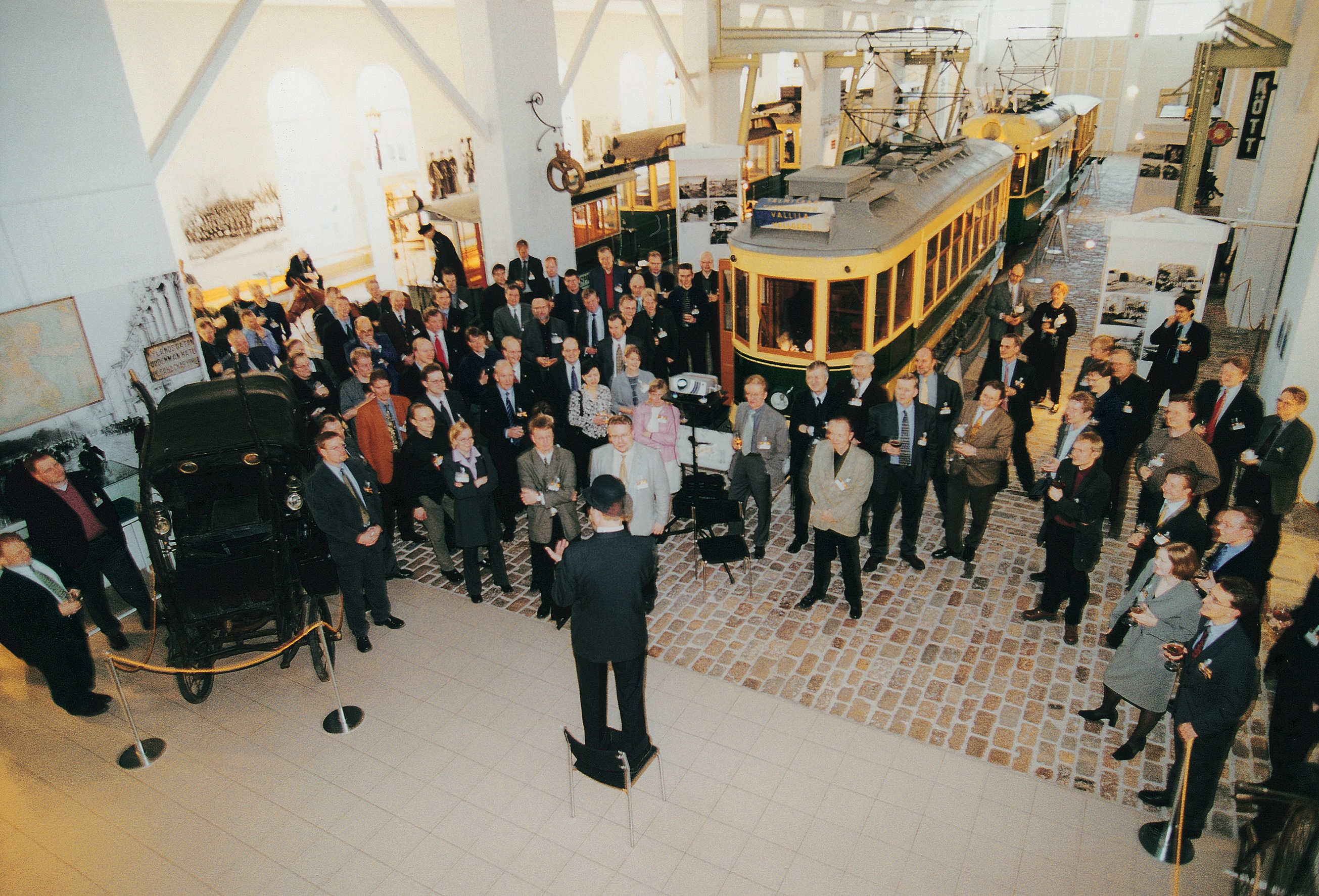
The first product was developed in Sophia Antipolis by an international team. It was released in spring 2001 as Smart Information Router, but the name soon changed to Semantic Information Router (SIR) — the first version of what is today the Profium Sense graph database.
One core, many products
SIR's core idea, describing and managing diverse content through metadata, has proved durable across very different industries, and several product lines have been built on top of it over the years.
The needs of the public sector gave rise to the Profium Digital Archive solution, which meets the requirements of long-term preservation and data disposal. The technology found applications in managing the collections of museums and other organisations, where information security, well-defined processes and effective search are essential.
One of the most significant commercial breakthroughs in Profium's history was a collaboration with one of the world's leading mobile technology companies. The company licensed Profium's technology under an OEM model for mobile content management and built it into its own business. This was concrete evidence that Profium's technological core mattered outside Finland too, and in environments far broader than its original purpose.
The French news agency AFP uses Profium's technology in its global content distribution. This customer relationship is another good example of how the same technological core has been able to serve organisations handling very large, international volumes of data.
The growth of security-critical business
Jari Vänttinen's arrival in 2010 brought the company its Mikkeli office, and with it the defence sector business, where situational awareness solutions have been built on the same technological core. Vänttinen recognised early on the potential of Profium's technology in public safety solutions. The defence sector has brought with it its own, extremely precise requirements for product development and information management.
Today, defence technology is Profium's most significant business area. Its solutions are used in demanding security environments, where combining, managing and securely using information from different sources is critical. In these environments, data classification, access rights, traceability, retention and secure handling must be at an entirely different level than in conventional information management.
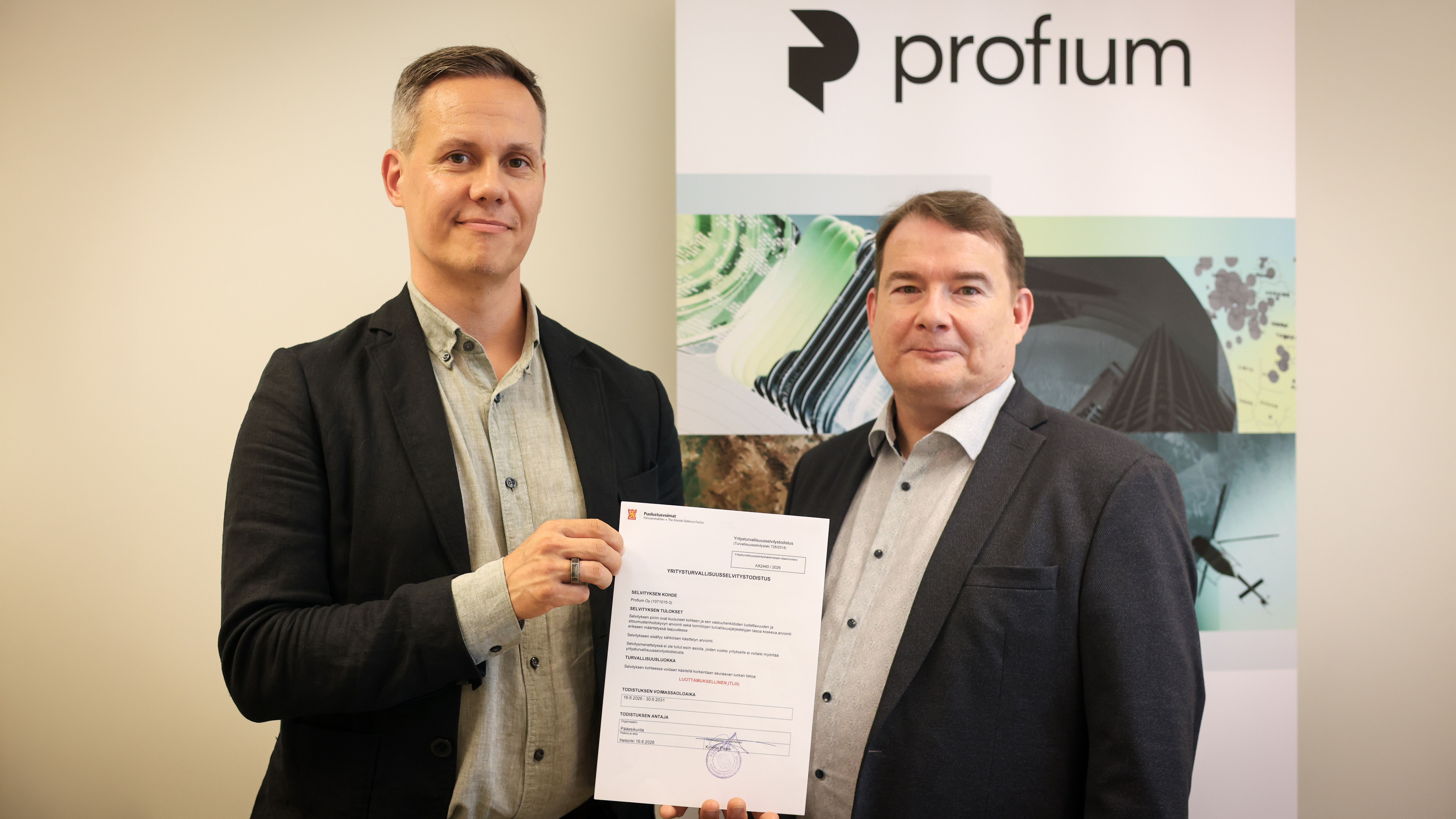
This development received concrete confirmation on 2 July 2026, when Profium received the national corporate security certificate issued by the Finnish Defence Forces. It strengthens the company's position in the operating environments of security technology and defence.
Leadership evolves with the company
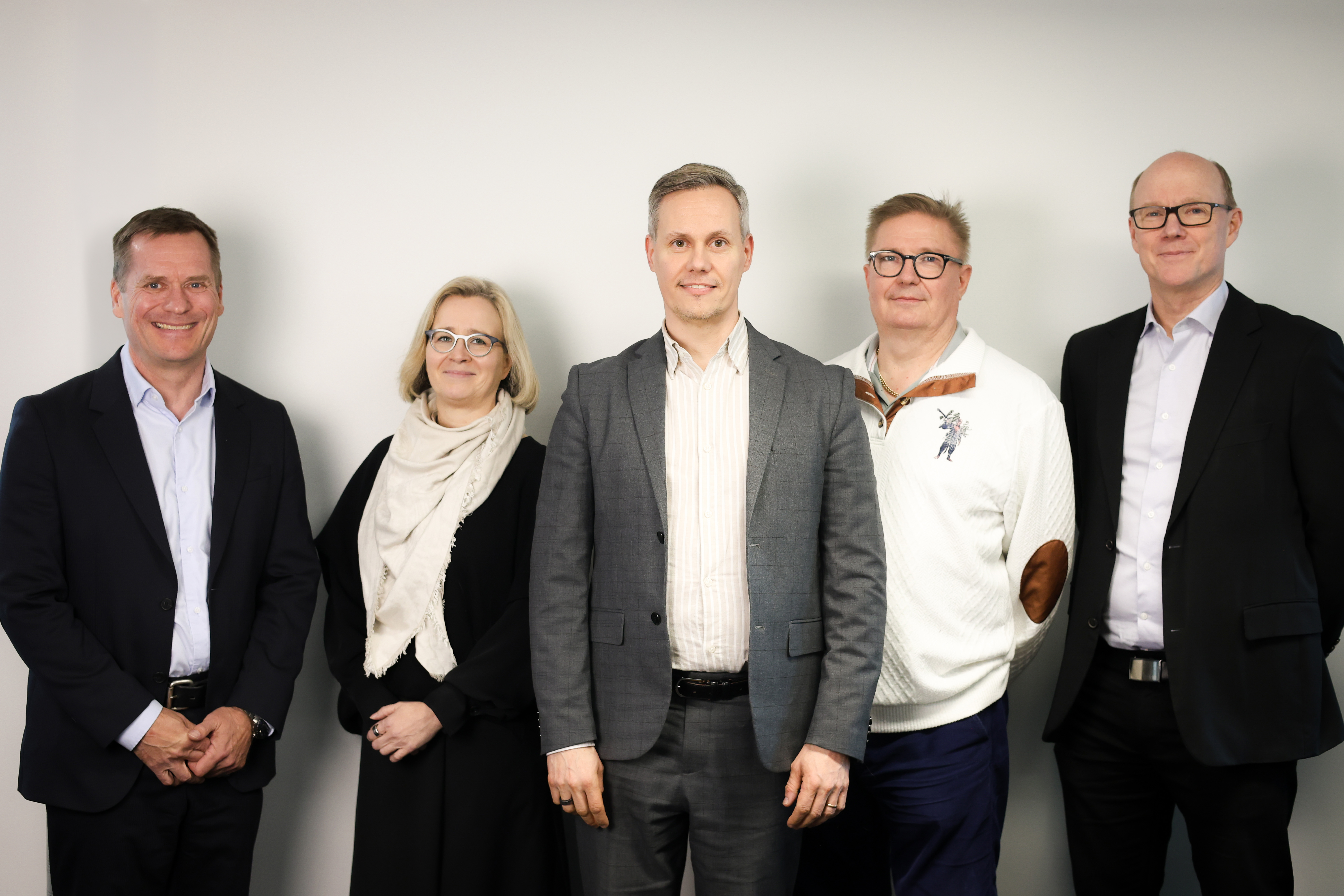
In 2012 Janne Laakso became chair of the board, succeeding Matti Mujunen, who had held the role for many years. Over the years, the board has also been strengthened with solid business expertise. Ilkka Starck joined the board in 2024 and Sanna Rajaniemi in 2025.
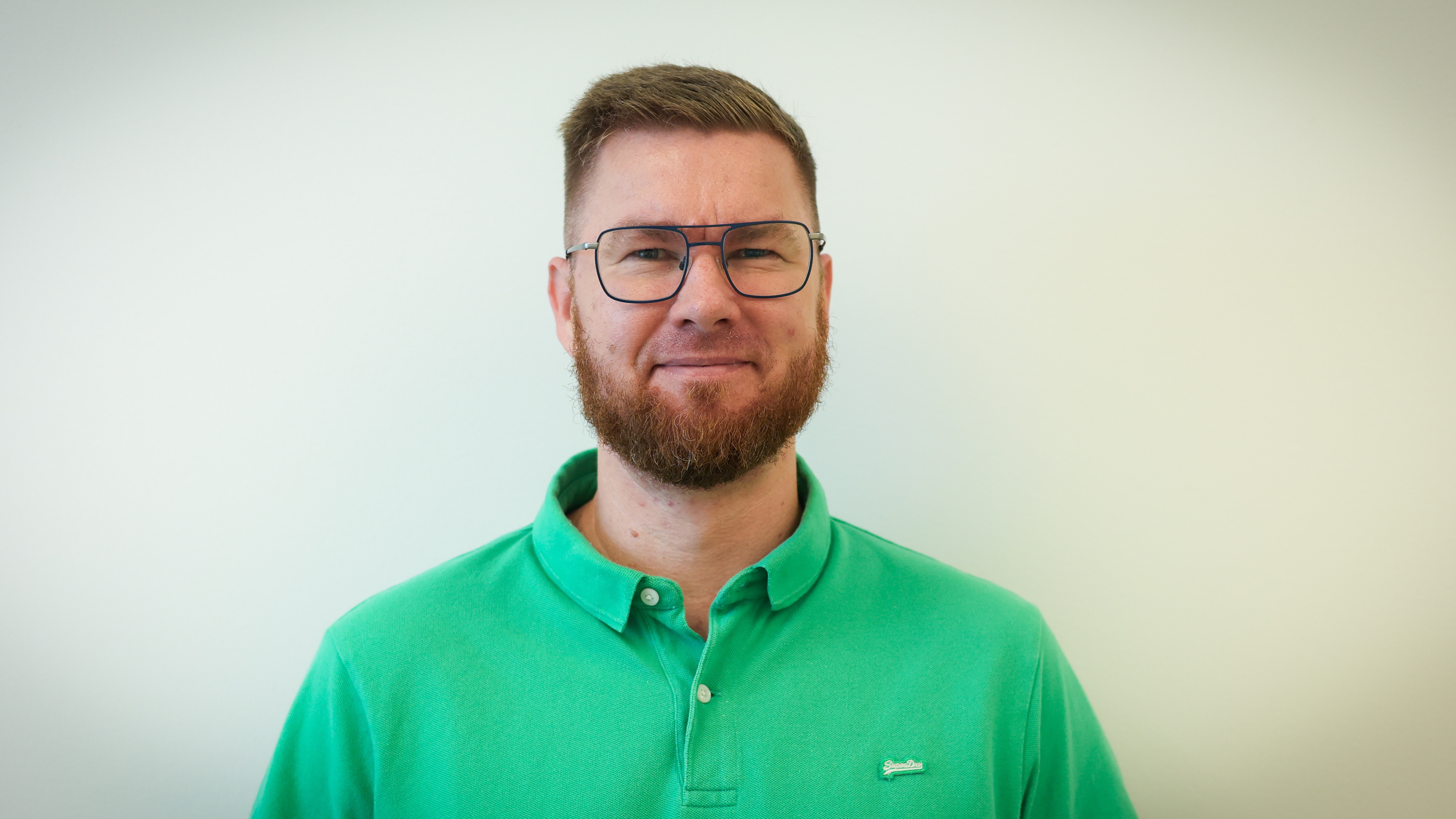
Perhaps the most pivotal change of recent years came in 2024, when founder and long-serving CEO Janne Saarela made way for a new CEO, Perttu Heinonen. Under his leadership, Profium has strengthened its software business in particular, developed the company's processes and operating models, and built a foundation for growth. Janne Saarela continues in an operational role as COO.
The founders' task, in their time, was to find the technology and build a working company around it. The task now is to grow it into an internationally scalable security technology company.
The people behind it all
Thirty years of history has not been built on technologies, products or strategies alone. It has been built by people.
Profium's entire staff deserves a great deal of thanks. The company's strength has always been in people who have been willing to solve hard problems, to go to the customer even when the solution isn't finished yet, and to build something together that hasn't been done before. Not everyone can be named here, but a few examples say a great deal about the kind of expertise and attitude Profium has been built on.
Albert MacSweeney has been a technological wizard, particularly on the AFP work and in the most demanding technical solutions.
Pasi Tiitinen has embodied persistence and a customer-first mindset. Over the years he has been involved in countless customer deployments and service situations, and has solved the problems customers have run into.
Esa Ryömä's good humour and energy have been a valuable resource for Profium. Customer challenges call not only for technical skill but also for the ability to keep spirits up and find a solution even when the situation looks difficult.
The Mikkeli team also deserves special thanks. Mikkeli has brought Profium strong expertise in demanding security, situational awareness and defence solutions.
Customers are part of the story
Profium's 30-year history would not exist without the customers who have travelled with the company through its different phases.
Many of Profium's customer relationships are exceptionally long-standing. In many cases, the collaboration has meant not just delivering software, but developing the customer's business and ways of working together over years and even decades. Profium's technology has been built for real needs, and at the same time customers' requirements have continually challenged the company to develop.
It is precisely these long-standing relationships that have made it possible for Profium to grow alongside its customers. As customers' operating environments have changed, Profium's technology and solutions have been developed to meet new needs. The fact that so many customer relationships have lasted this long says something about trust above all. For that we are especially grateful.
Looking ahead
After thirty years, the gaze turns to the future once again. The changed geopolitical situation has opened up an entirely new kind of market for defence and security technology. The shift in Europe's security environment, growing defence investment and the need to strengthen national resilience are all increasing demand for solutions that allow critical information to be managed, combined and used securely.
Profium's aim is to grow its defence business internationally and to find new strategic partners through which the technology can be taken to new markets. Partnerships are especially important in a business where customer needs, market access and local expertise together form a significant competitive factor.
A second key opportunity lies in the relationship between generative AI and Profium's core: symbolic reasoning and semantic modelling. As more information is generated than ever before, better ways are needed to understand what data means, how it relates to other data, and who is entitled to access it. In security-critical environments it is not enough for AI to produce an answer. You have to know what the information is based on, how it arrived, and who has the right to use it.
One important principle, though, is the same as it was 30 years ago: listening closely to the customer and building working products based on their needs. Saarela points out that the same thinking applies to recruitment: a good software designer can talk to people as well as to machines. "Understanding end users' needs matters more than simply thinking about how to make the software faster," Saarela says.
For thirty years, Profium has been driven forward by the same curiosity that once led a young researcher to wonder what the web might make possible. In 1996 the question was how to get information moving on the new web. Today the question is how critical information can be combined, understood and put in the hands of the right decision-maker, at the moment when it matters.
One thing has not changed: the desire to see what is still possible. That is why Profium's next thirty years will be built on the same foundation as the first.